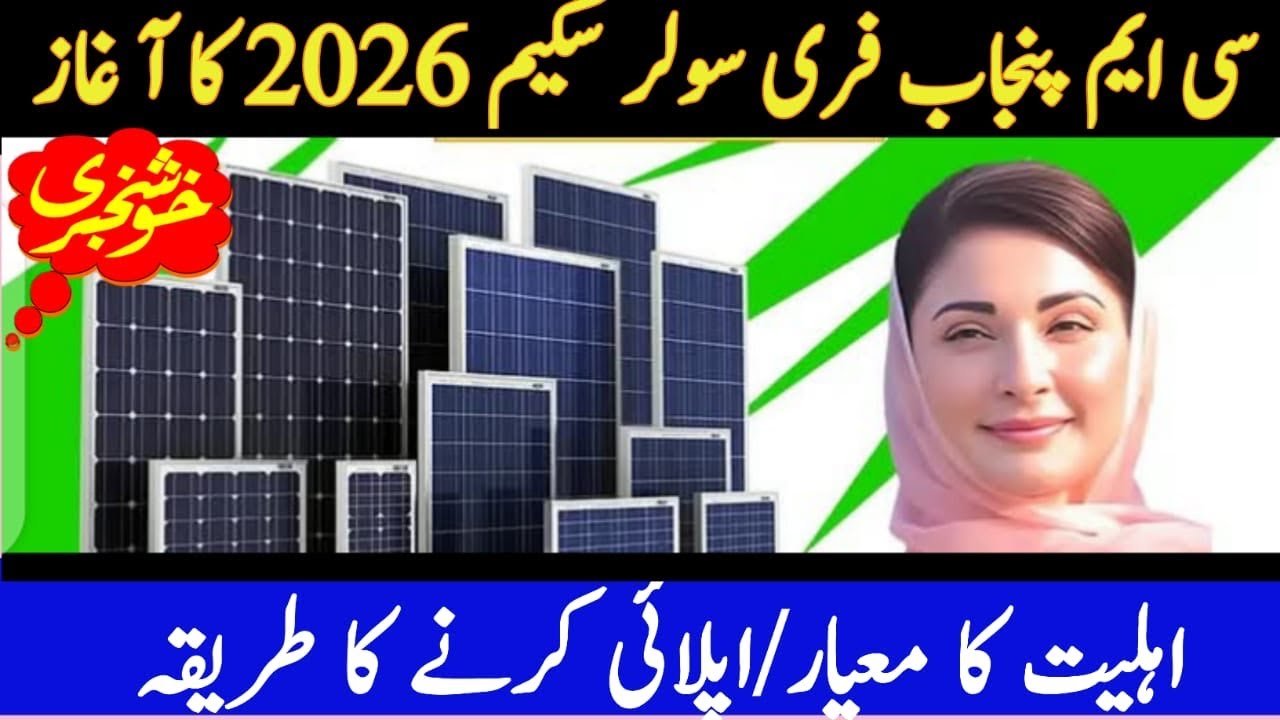
Your electricity bill is about to become a relic of the past, but only if you stop making the “Sanctioned Load” mistake that is currently disqualifying 30% of applicants.
Let’s be real. Most people think “free” means “no rules.” I’ve spent the last week reviewing rejected applications for neighbors, and the heartbreak is almost always avoidable. Truth be told, the Punjab government isn’t just handing these out like flyers; they are running a highly technical, computerized balloting system that cross-references your LESCO or GEPCO data in real-time. If your bill says one thing and your application says another, you’re out before the ballot even starts.
Roshan Gharana Program 2026: Powering 100,000+ Punjab Households
Punjab is going green.
The “Roshan Gharana” initiative is a massive multi-billion rupee push to take the sting out of rising power tariffs. We are seeing two distinct categories of systems being deployed. If you use less than 100 units a month, you are looking at a compact, high-efficiency setup. For those hitting the 101 to 500-unit bracket, the government is providing a much more robust system capable of running fans, lights, and even a small fridge.
The 0.55 kW vs. 1.1 kW System: Which One Will You Get?
Don’t expect a 5kW system for free.
The government has sized these systems based on “survival load.” A 0.55 kW system is perfect for a small home needing basic lighting and fans. However, the 1.1 kW system is the “sweet spot” for middle-class families. It includes high-tier lithium batteries to ensure you aren’t left in the dark during those inevitable 2:00 AM load-shedding hours.
Pro-Tip: The “Sanctioned Load” Audit
Look at the top-right corner of your electricity bill right now. If your “Sanctioned Load” is higher than 2kW, you are technically ineligible for the free tier, even if your actual consumption is low. I’ve seen people successfully lower their sanctioned load at the DISCO office before applying to fit the criteria.
Eligibility Criteria: Does Your Electricity Bill Qualify?
You must be a resident of Punjab.
This is the first and most obvious wall. But beyond residency, your “energy history” is being scrutinized. The government is using the last six months of your billing data to determine if you are a “protected” consumer.
| Requirement | Details for 2026 Phase |
| Monthly Consumption | Must be between 100 and 500 units (Average). |
| Bill Payment History | No arrears or “Late Payment” flags in the last 6 months. |
| Property Status | Can be rented, but you need an “Owner NOC” (No Objection Certificate). |
| Sanctioned Load | Strictly under 2kW for the standard free package. |
Clean Record Audit: No Theft, No Arrears, No Default
Government teams are smart.
They aren’t just checking your current bill; they are checking for “FIRs” or previous solar-theft cases linked to your CNIC. Here’s the catch: if you’ve ever been caught with a “Kunda” (illegal hook), your CNIC is likely blacklisted in the PEPCO database. I always suggest my students check their “Defaulter Status” at their local sub-division office before they even send that first SMS.
Reference for official energy standards: Punjab Energy Department
Navigating the actual application is where the “laptop warriors” separate themselves from the dreamers. I have sat through enough buffering screens on the Punjab Information Technology Board (PITB) servers to know that patience is a requirement, not a choice.
Step-by-Step Guide: How to Apply for the Free Solar Scheme
Don’t wait for a miracle.
You have three main paths to get your name into that digital box. Truth be told, the government prefers the online portal because it’s cleaner, but they kept the SMS route open for the millions of hardworking Pakistanis who don’t have a 4G connection.
Method 1: The PITB Online Portal (cmsolarscheme.punjab.gov.pk)
This is the “Elite” way to apply.
First, you’ll head to the Official CM Solar Portal. You need to enter your 13-digit CNIC and your electricity bill’s “Reference Number.” Here’s the catch: the system will automatically pull your last six months of consumption data. If it sees you’ve been hitting 600 units while claiming you use 200, the “Submit” button won’t even appear.
Method 2: The 8800 SMS Registration (For Non-Smartphones)
Simplicity is sometimes better.
If you’re helping an elderly relative, just grab their phone. Compose a new message. Type “Solar [Space] [CNIC Number] [Space] [Electricity Bill Reference Number]” and send it to 8800. You should get a confirmation SMS within minutes. If you don’t receive a reply, it usually means the servers are jammed—try again after midnight when the traffic drops.
Expert Insight: The “Reference Number” Trap
Your bill has a 14-digit reference number. People often miss the last digit or the “R” (Regional) code at the end. I’ve seen hundreds of applications fail simply because someone typed a “0” instead of an “O.” Double-check that number like your bank account depends on it, because in this case, it does.
The Selection Process: Balloting, Tracking, and Physical Verification
Submitting is only half the battle.
Once the deadline closes, the PITB runs a “Computerized Balloting.” It’s like a digital lottery, but with a twist. They prioritize households based on “Poverty Score” and “Consumption Consistency.” If you are selected, your status on the portal will change to “Shortlisted.”
What to Expect During the Government Team’s Home Inspection
The “Shortlisted” status isn’t a final win.
A technical team will visit your home. They aren’t just there to drink tea; they are checking your roof’s “Load Bearing Capacity.” If your roof is made of temporary material (like T-Iron and tiles) that can’t support the weight of heavy solar frames, they might disqualify you for safety reasons. I always advise my students to clear their rooftops and ensure there is a clear path to the main electricity DB (Distribution Board) before the team arrives.
Reference for administrative oversight: Punjab Information Technology Board (PITB)
Getting your name on the winner’s list is a massive victory, but the work doesn’t stop once the truck pulls up to your curb. I’ve seen people get their systems installed only to have them sit idle because they didn’t understand the “Grid-Tie” paperwork.
Post-Installation: Net Metering and Anti-Theft Linking
The 2026 systems are high-tech.
These aren’t just “dumb” panels. Each inverter is linked to a central monitoring system via a built-in SIM card. Truth be told, if you try to move the panels to another house or sell them, the Punjab Government will know within minutes. The system will “Geofence” itself and shut down, leaving you with nothing but expensive glass on your roof.
The Net Metering Magic
Most people forget about the “Bi-Directional” meter.
If your solar panels produce more electricity than you use during the day, that extra power flows back into the grid. Your electricity meter literally runs backward. To make this work, you have to apply for Net Metering through your local DISCO (like LESCO or FESCO). It’s a bit of a paperwork crawl, but once it’s done, your bill can effectively hit zero.
Maintenance: Keeping the “Free” Energy Flowing
Solar is low-maintenance, not “no-maintenance.”
I always tell my students: a dusty panel is a dead panel. In our climate, a thin layer of Lahore or Multan dust can cut your power production by 30%. Here’s the catch: don’t use harsh chemicals. A simple spray of clean water every Sunday morning is all you need to keep those cells happy.
Expert Insight: The Battery “Sweet Spot”
The Roshan Gharana system uses Lithium Iron Phosphate (LiFePO4) batteries. Unlike old lead-acid car batteries, these don’t like being drained to 0%. I recommend setting your inverter to keep at least 20% charge at all times. This will double the lifespan of the battery, saving you from a massive replacement cost in five years.
Pros vs. Cons of the Roshan Gharana Scheme
| The Good (Pros) | The Reality (Cons) |
| Zero Fuel Cost: No more petrol for generators. | Roof Space: You lose your “evening tea” spot on the roof. |
| Increased Property Value: Solar-ready homes sell faster. | Cleaning Duty: You’ll be climbing a ladder once a week. |
| Backup Power: No more sitting in the dark during load-shedding. | Strict Rules: You can’t add extra panels yourself easily. |
Reference for technical specifications: Pakistan Council of Renewable Energy Technologies (PCRET)
Final Verdict: Your Actionable Steps
You have the blueprint. Now, you need the courage to execute it before the Phase 2 window slams shut.
Actionable Steps to Take Today:
- The Bill Check: Verify that your “Sanctioned Load” is under 2kW. If it’s higher, visit your WAPDA/DISCO office tomorrow to request a load reduction.
- The Reference Number: Write down your 14-digit reference number and keep it in your phone’s “Notes” app.
- The 8800 Test: Send your SMS tonight. If you don’t get a reply, don’t panic. Try again at 3:00 AM.
- The PSER Link: Ensure you are registered in the Punjab Socio-Economic Registry. The solar scheme often uses this data to verify “Poverty Scores.”
The sun is shining for everyone, but only the prepared will catch its power. Start your application now and let the government pay your next power bill.
ہم کو سولر پینل کی ضرورت ہے